

Leading brands that work with us









Migrations
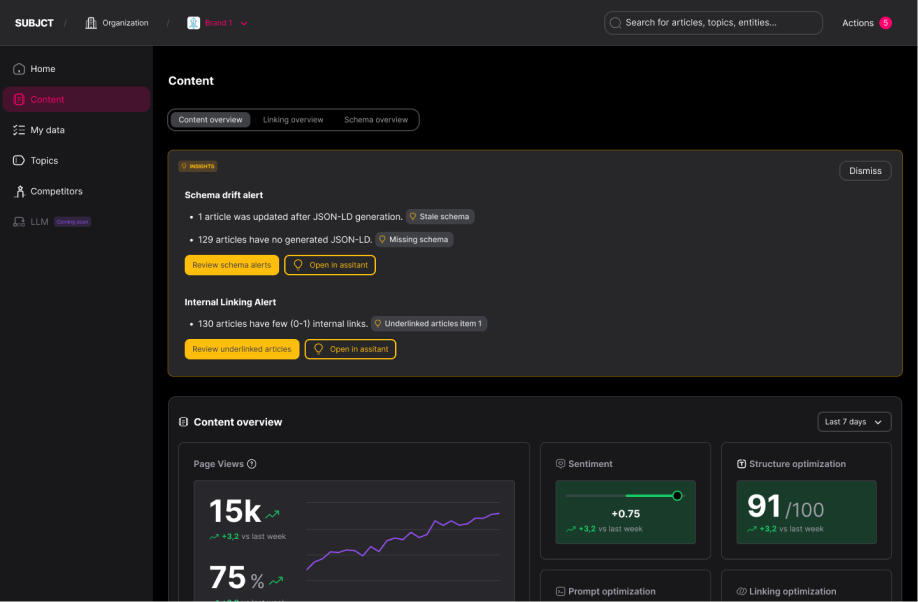
Most migrations leave AI search readiness behind.
When a CMS migration lands, the brief is architecture, build and launch. Content is assumed to carry across cleanly. It doesn't. Archives arrive unstructured, and invisible to AI search.
AI search platforms don't cite what they can't read.
ChatGPT, Perplexity, and AI Overviews select content on structure, entity clarity and semantic relationships. Pages without schema, coherent links or entity foundations don't get cited.
Legacy content was never built for AI search.
Content published years ago predates AI search - sparse links, no schema, lack of structure. A new CMS changes the platform, it doesn't optimise the archive.
Content Optimisation
Optimise the whole archive. Before you go live.
Connect your CMS, ingest the archive, and SUBJCT runs the optimisation passes that decide whether AI search engines can find, read and cite the content.
Automated internal linking
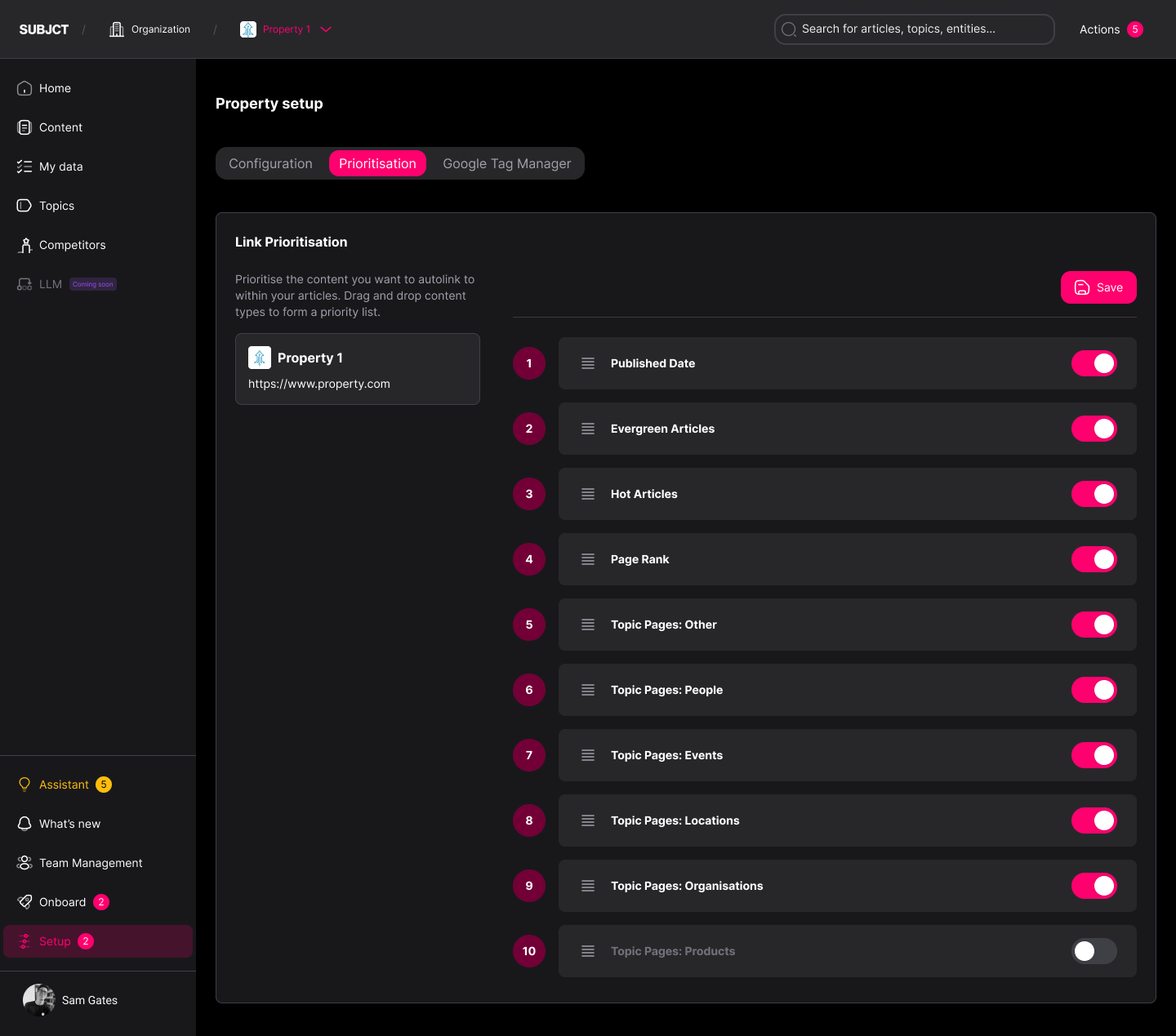
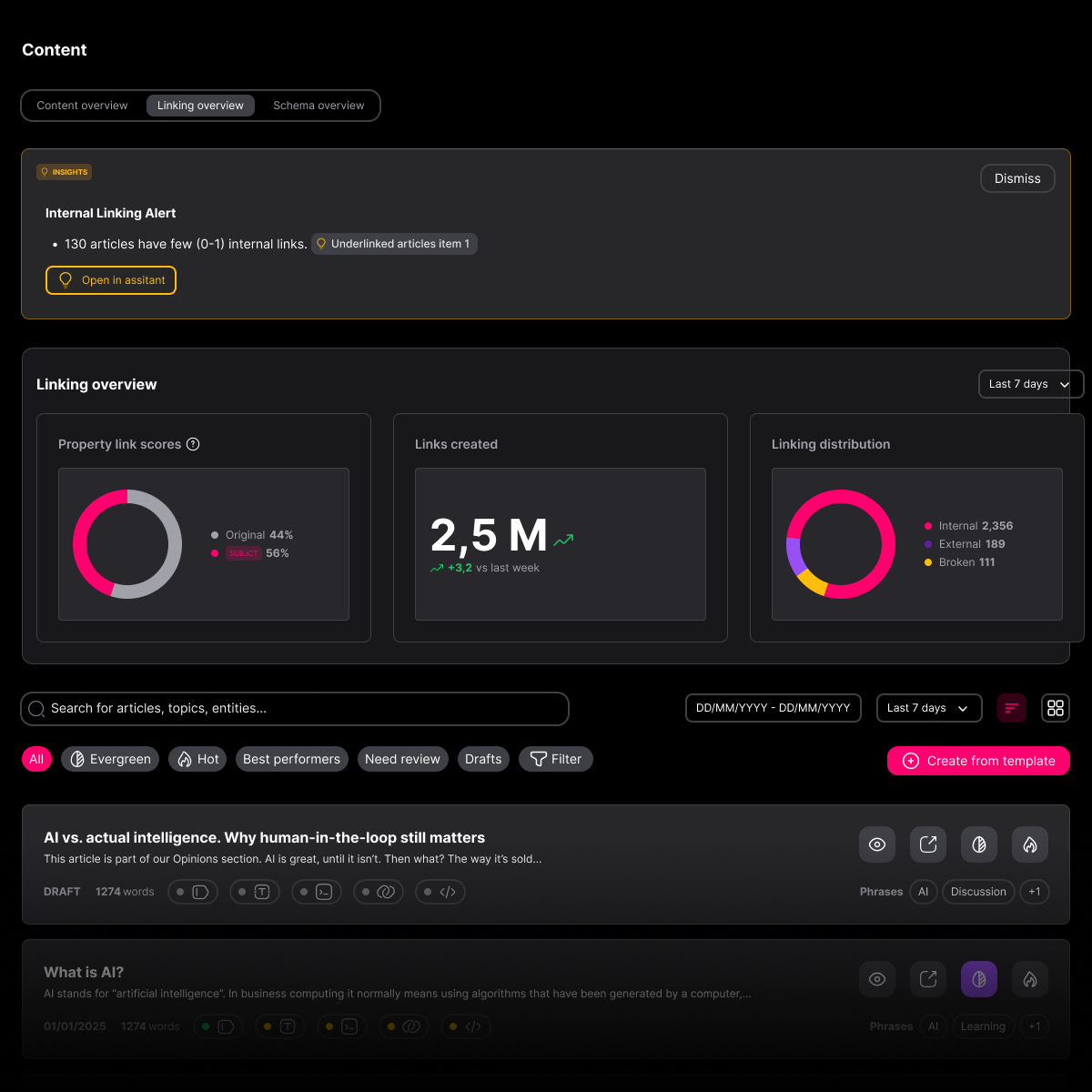
Semantic links implemented across every eligible page, based on entity and topic relationships in the content itself.
JSON-LD schema generation
Entity-aware schema generated, type-assigned and validated for every page. Applied archive-wide, not page by page.
Entity and semantic tagging
Related entities surfaced as you write, so you build topical depth before you publish.
Workflow
How a SUBJCT migration works.
An API first solution, with a Web Application to manage the migration and optimisation of content at scale.
Ingest & Analyse
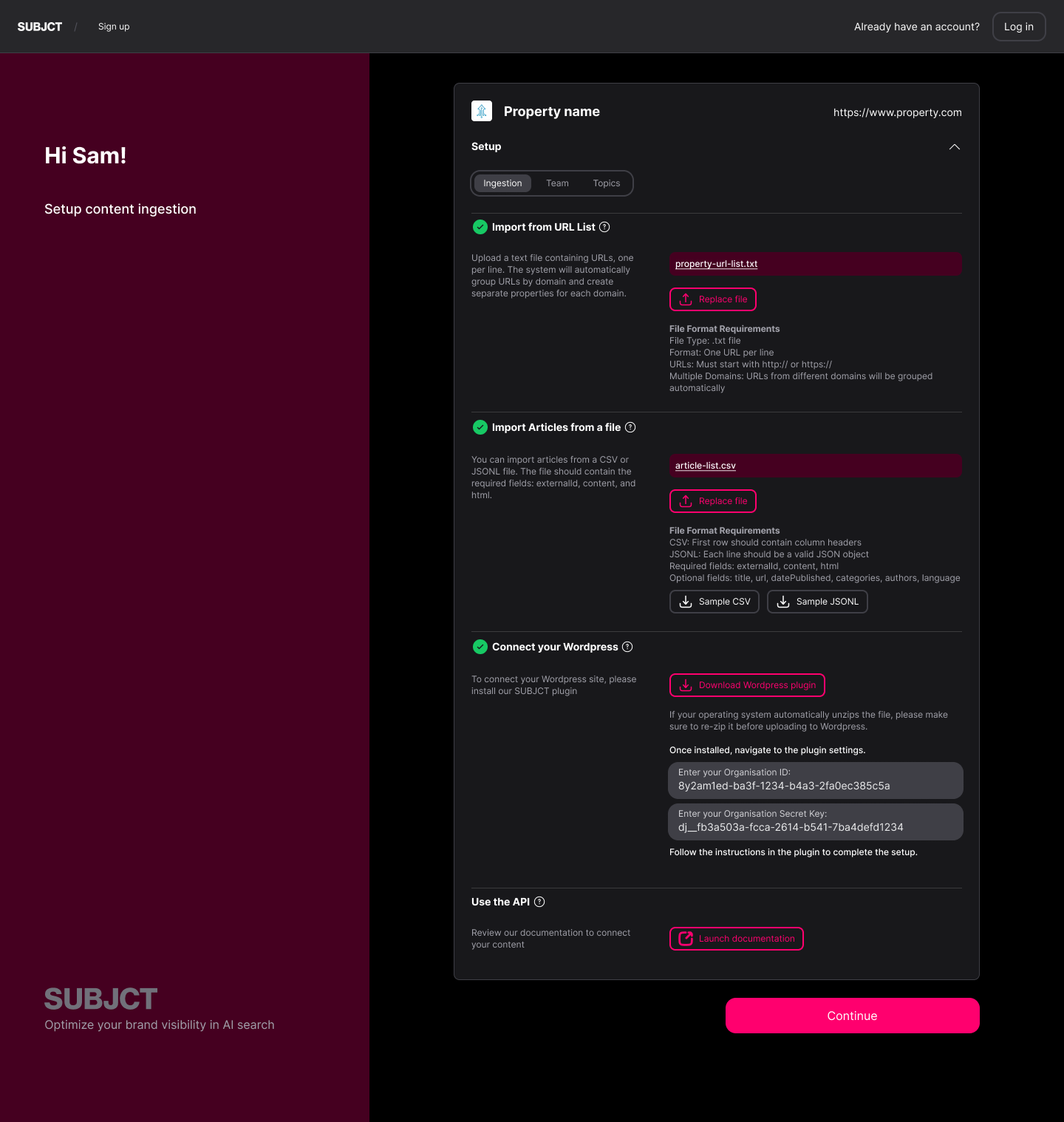
Ingest the full archive via the SUBJCT API. SUBJCT indentifies entities and IAB categories.
Optimise
Links, schema and entity tags applied consistently across every page, not just the high-traffic ones.
Export & Migrate
Related entities are surfaced as you write, so you build topical depth before you publish your content.
Ready to build AI search optimisation into your stack?
Get in touch to find out more about our suite of content optimisation products built for AI Search.
.png)
Frequently asked questions
How is SUBJCT different from an SEO plugin or crawl tool?


SEO plugins work page by page on traditional on-page signals. Crawl tools flag issues but don't fix them. SUBJCT works at archive scale and implements the optimisation itself - entity recognition, semantic clustering, JSON-LD schema and internal link architecture.
Does SUBJCT generate content?
No. SUBJCT optimises the structure, machine readable data and linking of existing content - the signals that decide whether it's readable and citable by AI search. It makes human-authored content perform better; it doesn't replace it.
How large an archive can SUBJCT process?
SUBJCT is built for publisher-scale volumes. KHL Group's 30,000-article archive is a confirmed delivered result, and the architecture is designed to scale to hundreds of thousands of pages and beyond.
Can SUBJCT be used after a migration has already launched?
Yes. It fits the migration window and delivers an optimised archive before launch, but it works equally well on a live site. Optimising before launch avoids the organic drop; optimising after recovers from it.
What does SUBJCT's internal linking actually do during a migration?
It analyses entity and topic relationships across the archive and implements contextual links between related pages, not a list for a content team to action manually. The result carries into the new CMS as a coherent link graph from day one.
What integrations does SUBJCT support for a migration?
SUBJCT is API-first, with a web application for configuration and a live WordPress plugin. The API integrates into any headless CMS or feeds the output directly into your stack.
How is SUBJCT priced for a migration project?
Usage-based, calculated on the volume of articles migrated plus any technical support required.
Does SUBJCT replace our existing SEO tooling?
No. SEMrush and Ahrefs handle keyword research, backlinks and traditional ranking signals. SUBJCT handles the content-structure layer that determines AI search performance. Most clients run both.

Still have questions?
Can’t find the answer you’re looking for? Please chat to our friendly team.
Get in touch
SUBJCT
Get in touch
Latest posts
Resources and insights for AI search
The latest industry news, interviews, technologies, and resources.



View all posts

Content Optimisation Built for AI search.